World Physiotherapy has taken an important step towards developing global guidance on the responsible and ethical use of artificial intelligence (AI) in physiotherapy, following an international summit held in Taipei, Taiwan, on 10–11 October 2026.
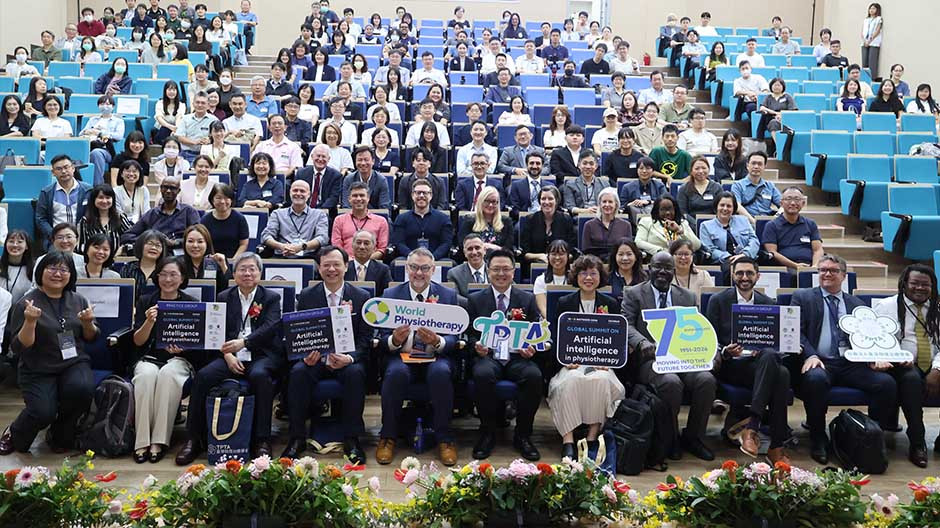
The event marked a significant milestone in the development of the World Physiotherapy Taipei Principles for the Responsible Use of Artificial Intelligence (AI) in Physiotherapy, a set of guiding principles intended to support informed decision-making across the profession.
The Global Summit on AI in Physiotherapy brought together leading international experts in physiotherapy practice, education, and research from across the globe, details of which can be found below. Their collective expertise and diverse perspectives were essential to critically examining the opportunities, risks, limitations, and potential unintended consequences of AI.
Suh-Fang Jeng, World Physiotherapy vice president and chair of the steering committee, said: 'The spark of the AI Summit began with a Taiwanese internship project on AI for physiotherapy sponsored by the Pathfinder Program in 2024, with the awareness that the WMA, FDI, FIP, and some World Physiotherapy member organisations have already published AI guidelines. The vision of this AI Summit has been turned into reality after a year-long planning process with the support of World Physiotherapy and the Taiwan Physical Therapy Association (TPTA) leadership, international experts, and sponsoring organisations.’
The development process is being guided by three expert leads: Ashley James, Michael Rowe, and Nicolas Pinsault. Together with a group of international experts, they brought a wealth of professional knowledge, experience, and diverse perspectives to the summit, critically examining the opportunities and challenges of AI and collectively shaping the emerging principles.
Hosted by TPTA, the summit was organised in collaboration with the Industrial Technology Research Institute (ITRI) and the School and Graduate Institute of Physical Therapy, National Taiwan University, with support from Taiwan's Ministry of Health and Welfare, Ministry of Foreign Affairs, and Department of Industrial Technology, Ministry of Economic Affairs.
Taiwan's President, Lai Ching-te, shared a written message welcoming summit participants and recognising the importance of developing global guidance on the responsible use of AI in physiotherapy. He also met with World Physiotherapy president Michel Landry, vice president Suh-Fang Jeng, and chief executive officer Sidy Dieye, expressing his support for the initiative, appreciation that the principles were being developed in Taiwan, and continued funding to validate the Taipei principles locally.
Developing guiding principles
The summit formed part of a wider programme of work to explore how AI is influencing physiotherapy practice, education, and research, and identify the considerations needed to support its responsible use by those choosing to adopt and implement AI technologies.
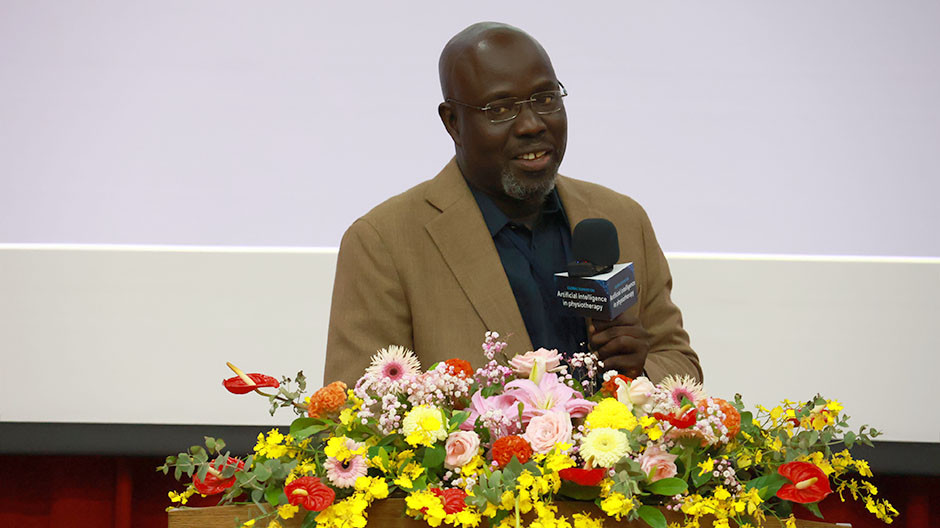
Sidy Dieye, World Physiotherapy chief executive officer, said: ‘AI will undoubtedly influence the future of physiotherapy, but it is our collective responsibility to determine how.
Technology should empower physiotherapists, support informed clinical decisions, and enhance patient outcomes, while preserving the human connection and professional accountability that are fundamental to our profession.
The Taipei Principles give us a common starting point for navigating that future with confidence, responsibility, and purpose.’
Preparatory work included reviewing existing international AI frameworks and guidance, which provided a foundation for discussions. Participants considered both the potential benefits of AI and the ethical, practical, and professional challenges associated with its use, including the importance of human involvement, equity, accessibility, and maintaining person-centred care.
Discussions also recognised that AI may not always be the most appropriate solution, and that its adoption should be critically evaluated alongside other approaches.
The resulting draft principles are intended primarily for World Physiotherapy member organisations and specialty groups, as well as relevant partners and interested organisations. Their broad scope may also make them useful to individual clinicians, educators, and researchers.
They are designed to be applicable across different healthcare systems and resource settings, recognising that organisations operate within varying levels of technological development, infrastructure, and access to resources.
The guiding principles are not intended to be prescriptive or to replace existing national legislation, regulation, or professional guidance. Instead, they aim to provide a shared foundation that organisations can interpret and apply within their own contexts.
The principles address themes including purpose and benefit, human-centredness and connection, and equity and accessibility. They represent an important first step in an ongoing process, rather than a definitive position on the use of AI in physiotherapy.
Strengthening international collaboration
Following the summit, World Physiotherapy board and staff members joined international AI experts for a visit to ITRI, providing further opportunities for knowledge exchange and collaboration.
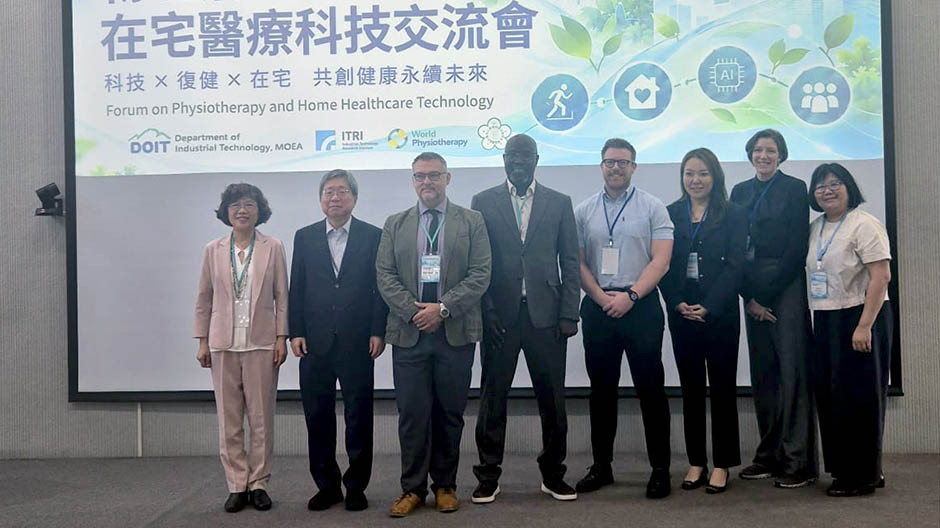
The visit included presentations from ITRI and physiotherapy experts Ashley James (UK), CJ Morrow (USA), and Haneul Lee (Korea), exploring developments and applications of AI in healthcare and rehabilitation. Participants also toured the institute's facilities, including its living labs.
World Physiotherapy thanks TPTA for hosting the summit, ITRI for its collaboration, the supporting government organisations, and all the experts and participants who contributed their knowledge and perspectives to what was a historic event for the profession.
Expert participants
AI in physiotherapy - practice
Ashley James (United Kingdom) - Group lead
Mary-Catherine Fraser (Canada)
Caroline (CJ) Morrow (United States)
Ali Soroush (United States)
Nai-Jia (Linda) Yao (Taiwan)
AI in physiotherapy - research
Nicolas Pinsault (France) - Group lead
Gabriel Alain (United States)
Ya-Lan Chiu (Taiwan)
Claudio Tapia (Chile)
Kanji Yamada (Japan)
AI in physiotherapy - education
Michael Rowe (United Kingdom) - Group lead
Chih-Hsiu Cheng (Taiwan)
Haneul Lee (South Korea)
Desmond Mathye (South Africa)
Leo Ng (Australia)
Joost van Wijchen (Norway)
Next steps
The draft Taipei Principles are undergoing further refinement, drawing on feedback and consultation to ensure they remain relevant, practical, and applicable across the diverse contexts in which physiotherapy is practised, taught, and researched. The principles will be made available in due course.
Potential future activities exploring how they may be applied in different scenarios, providing practical examples to support their interpretation and implementation may also be developed.
As AI technologies and their applications continue to evolve, the principles will also be subject to periodic review to reflect emerging evidence, developments, and challenges.
Together, this work aims to support the profession in critically evaluating AI and making informed decisions about its safe, responsible, and ethical use.
Discover more activities celebrating World Physiotherapy's 75th anniversary