This year, the Japanese Physical Therapy Association (JPTA) is celebrating its 60th anniversary, marking six decades of development and evolution for the association and physiotherapists in Japan.
The anniversary has particular significance in Japan, as turning 60 is known as Kanreki, marking the completion of the traditional zodiac cycle and the beginning of a new one – a moment associated with renewal and rebirth.
Founded in 1966 with just 110 members, at a time when the physiotherapists were still establishing its place in Japanese society, JPTA has grown to represent more than 140,000 physiotherapists today.
Hideyuki Saito, president of JPTA, said: “Our 60th anniversary is not only an opportunity to celebrate our history, but to reflect with gratitude on the people and partnerships that have shaped our journey and to look ahead with determination to a new cycle for physical therapy in Japan. Building on the foundations of the past 60 years, we are passionate about continuing to expand the possibilities of physical therapy, to innovate and challenge ourselves, and contribute to improve health and wellbeing in Japan and around the world.”
Shaping the role of physiotherapy in Japan
Over the past six decades, JPTA has worked hard to strengthen the position of physical therapists within Japan’s health system while expanding the contribution the profession makes to health and wellbeing throughout people’s lives.

In recent years, this has included sustained engagement with national government and policymakers to strengthen recognition of rehabilitation professionals including physiotherapists, improve working conditions, and explore opportunities to develop the scope and status of the profession.
The establishment of a Rehabilitation Coordination Office within Japan’s Ministry of Health, Labour and Welfare is a significant milestone, embedding rehabilitation more firmly within national health policy and sending a strong message about the central role of physiotherapy in supporting health and wellbeing.
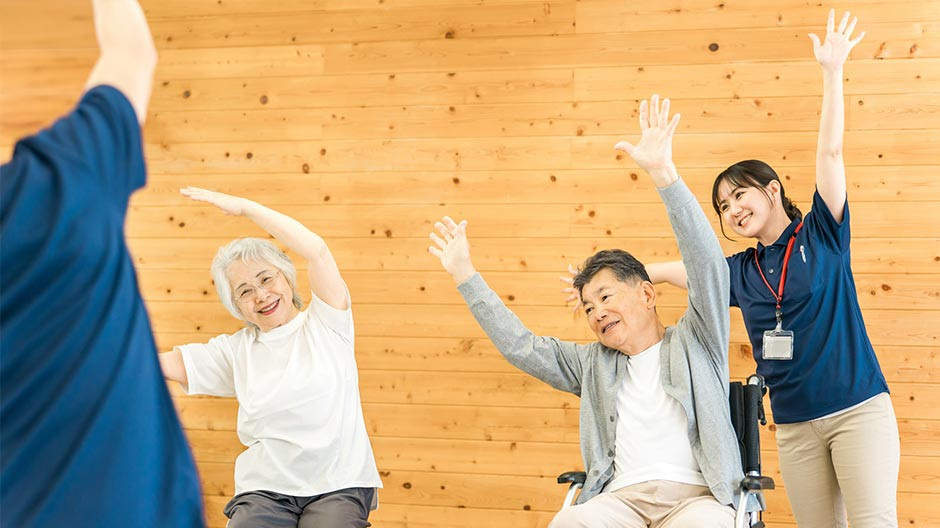
Alongside this policy work, JPTA has promoted a greater role for physical therapists in prevention and health promotion, extending their contribution beyond traditional hospital-based rehabilitation and into communities. A key focus has been the prevention of frailty and the need for long-term care among older adults. These efforts also include strengthening the role of physiotherapists in disaster response, particularly in supporting disaster-affected populations by preventing health complications associated with physical inactivity.
Physiotherapists have also been recognized in the Ministry’s postpartum care guidelines, reflecting the profession’s expanding contribution to women’s health, including pelvic health and perinatal care. Furthermore, the role of physiotherapists is expected to be explicitly incorporated into the Sports Agency’s next Sport Basic Plan.
Together, these developments reflect an increasingly broad role for physical therapists in Japan – from rehabilitation following illness or injury to prevention, healthy ageing, women’s health, and supporting communities during emergencies.
Connecting Japan with the global physiotherapy community
International engagement has also played an important role in JPTA’s development.
The World Physiotherapy Congress in 2025, held in Tokyo, brought together more than 4,500 participants from over 110 countries. Supported by JPTA members and student volunteers, the event provided an opportunity to showcase physiotherapy practice and Japanese culture to colleagues from around the world.
The congress also helped bring international perspectives to JPTA’s members and strengthened connections between the profession within Japan and with the wider global physiotherapy community.
World Physiotherapy chief executive, Sidy Dieye, said: "For six decades, the Japanese Physical Therapy Association has been a valued partner in the global physiotherapy community. JPTA’s remarkable growth and commitment to advancing the profession, both in Japan and internationally, are an impressive legacy. We congratulate JPTA and its members on this important milestone and look forward to continuing our strong collaboration into its next chapter.”
As JPTA marks 60 years, Kanreki provides an opportunity to recognise the people, partnerships, and achievements that have shaped its first six decades, while looking ahead to the next chapter for its members and the future of physiotherapy in Japan.